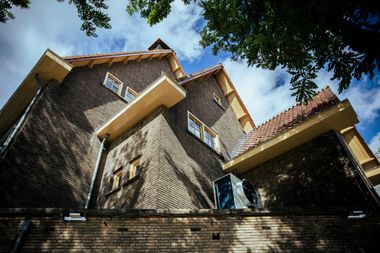

Co-creation at Cultuur&Campus Putselaan: a MOOC and Online Repository
This MOOC (Massive Open Online Course) introduces learners to how Cultuur&Campus Putselaan is being developed through co-creation, bringing together residents, students, cultural organisations, and public institutions to shape a shared space in Rotterdam. It combines theoretical foundations from participation and design research with practical insights from programme staff and municipal partners involved in the project. Through videos, reflections, and real-life examples, the course invites you to explore how co-creation works at different levels and what it means for building more inclusive and collaborative neighbourhoods.
Introduction: In what way is the Cultuur&Campus Putselaan being co-created?
This online repository and MOOC introduces how Cultuur&Campus Putselaan (C&CP) as a New European Bauhaus Lighthouse Demonstrator is being developed through co-creation, bringing together residents, students, cultural organisations, and local government and educational institutions to shape a shared space in Rotterdam. Cultuur&Campus Putselaan is a collaborative space in Rotterdam South with the ambition to bring together education, culture, and community life. This MOOC combines theoretical foundations from participation and design research with practical insights from the Cultuur&Campus Putselaan team and municipal partners involved in the project. Through videos, reflections, and real-life examples, this course invites you to explore how co-creation works at different levels and what it means for transitioning towards more inclusive and collaborative neighbourhoods.
It also touches upon the many challenges to co-creation. You will begin by learning about the social and urban context of Rotterdam South and the different partners involved, as well as the perceptions and challenges that influence how people work together.
The next module introduces to the core ideas behind co-creation. Drawing on influential thinkers such as Arnstein, Ostrom, Healey, and Sanders and Stappers, the course explains how participation, shared ownership, relationship-building, and creative collaboration form the foundation of co-creation in urban settings. You will also see how the New European Bauhaus provides a guiding framework for the space through its focus on its three core values: Beauty, Sustainability, and Inclusion.
The MOOC then moves to exploring some hands-on examples from the perspectives of Cultuur&Campus Putselaan team. You will gain insights into municipal decision-making, programme development, long-term partnerships, and relational approaches to collaboration through brief video segments featuring conversations with various stakeholders in C&CP, including researchers, the municipal project manager, the programme director, and others. We explore a tangible example of co-creation in the making of the campus opening exhibition. Together, these insights show how co-creation unfolds at different levels, from broad vision and governance to hands-on teamwork, inviting a reflection on your own role in fostering more inclusive and creative neighbourhoods. In the final module you will explore how Cultuur&Campus falls within a spectrum of innovative initiatives around the globe in which local communities collaborate and co-create with educators, artists and academia.
Each module includes a short set of reflection questions that you can answer at your own pace. These questions encourage you to connect the course content to your own experiences, consider different perspectives, and think critically about what co-creation means in practice. By engaging with them, you can deepen your understanding of how collaborative processes embedded in the New European Bauhaus vision unfold and how you might apply these ideas in your own work or studies. Feel free to also share your reflections with the Cultuur&Campus team!
Overview of Modules:
Module 2: The Perception of Social and Urban Challenges that Rotterdam South Faces
Module 3: What is Co-Creation?
Module 4: The New European Bauhaus and Co-Creation
Module 5: Examples and Reflections of Co-Creation at Cultuur&Campus
Module 6: International Perspectives on Co-Creation between Arts, Academia and Communities

Module 1: Cultuur&Campus Putselaan and the Various Groups and Stakeholders Involved
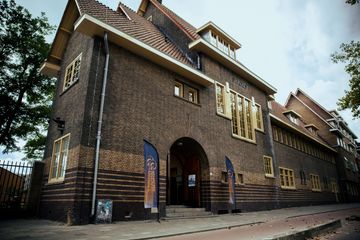
About Cultuur&Campus Putselaan
Cultuur&Campus Putselaan is a vibrant place in Rotterdam South where education, culture, and the local community come together. Located in a former school building on Putselaan, we are working towards the future, a place where learning, collaboration, and creativity are at the heart of what we do. Together, we are striving to build an inclusive and sustainable space. The Cultuur&Campus Putselaan is partly financed by the European Union, as a New European Bauhaus Lighthouse Demonstrator.
The mission of Cultuur&Campus is to create an inclusive, and lively place for learning and culture, where we hope everyone feels welcome and inspired. Local residents, organizations, and schools work together here, exploring ways of learning, creating, connecting that have sustainability, inclusion and social impact at their core.
The space is open to everyone who wants to contribute to the vibrancy, sustainability and inclusivity of the neighbourhood. Local initiatives, residents, policymakers, students, teachers, entrepreneurs, cultural organizations, and community initiatives collaborate here. They are invited to take part in programs and activities, create new connections and opportunities.
Several partners are contributing to this project:
Cultuur&Campus Putselaan Consortium
 ICLEI (Local Governments for Sustainability)
ICLEI (Local Governments for Sustainability)
A global network supporting local governments in sustainable urban development, focusing on circular economy, climate adaptation, and nature-based solutions.
 City of Rotterdam
City of Rotterdam
The municipality is dedicated to urban renewal, sustainability, and livability, and plays an active role in European city networks such as EUROCITIES and C40.
 ELIA (European League of Institutes of the Arts)
ELIA (European League of Institutes of the Arts)
Europe’s leading multidisciplinary network in higher arts education and research. A globally connected knowledge community for peer-learning, international collaboration and advocacy.
 Codarts University of the Arts
Codarts University of the Arts
A university for music, dance, circus arts, and arts education. Students and teachers collaborate with the cultural field through creative, practice-oriented education.
 BuzinezzClub
BuzinezzClub
A social enterprise that guides young people and those on welfare towards employment or starting their own business.
 Afrikaanderwijk Cooperative
Afrikaanderwijk Cooperative
A network of residents and entrepreneurs in Rotterdam South. They connect people through work, entrepreneurship, and community initiatives, showcasing the diversity and resilience of the neighbourhood.
 Willem de Kooning Academy (WDKA)
Willem de Kooning Academy (WDKA)
A creative academy and incubator for young makers. Students study visual arts, design, and event management, with space for experimentation and research.
 Hogeschool Rotterdam
Hogeschool Rotterdam
The Rotterdam University of Applied Sciences focuses on technology, design, and urban issues. They are helping with the renovation of the building.
 Erasmus University Rotterdam
Erasmus University Rotterdam
The university contributes research, teaching and knowledge on social challenges, sustainability, the role of arts, culture and creativity in urban development, wellbeing and resilience, striving to have a positive societal impact.
Reflection Question Module 1
Local co-creation in practice
NEB Lighthouse Demonstrator projects and similar community co-creation initiatives aim to involve multiple stakeholders in collaborative problem-solving. Is there a NEB Lighthouse Demonstrator project, or a similar community co-creation project near you? Search for a project and summarize the key aspects: what is unique to its local context? Who are the key stakeholders? Which key challenges does it face?
A few ideas on where you can find more co-creative projects:
New European Bauhaus Dashboard
The NEB Junction platform (coming online soon)
Module 2: The Perception of Social and Urban Challenges that Rotterdam South Faces
The Context of Rotterdam South
The campus is located in Rotterdam South, a part of the city that faces many of the social, economic and urban challenges and opportunities that are typical of large urban areas.
Rotterdam South has developed in close connection to the city’s port activities. Following post-war expansion and labour migration from Southern Europe, Turkey, and Morocco a diverse social fabric emerged, but also entrenched disadvantage. The area is undergoing rapid transformation resulting from urban development projects, which have driven gentrification and (fears of) displacement (Custers, 2021). Limited resident consultation has fuelled distrust of government bodies and researchers (Horgan & Koens, 2024). Meanwhile, while numerous research projects have focused on socio-economic challenges, many have yielded little tangible benefit for residents, fostering scepticism and participation fatigue (Oostveen, 2023). The Afrikaanderwijk Coöperatie Consultancy Buro aims to redress this situation by promoting a more reciprocal approach to local knowledge and research, in support of community networks and economies and their resilience (Coöperatief Consultancy Buro, 2025).
During one of the first classes held at the location, we asked university students to write down their thoughts about the area on sticky notes. Most students were not familiar with Rotterdam South and therefore relied on anecdotal accounts. Below you can see what the students wrote about Rotterdam South. Can you spot some patterns and recurring stigmatizing impressions?
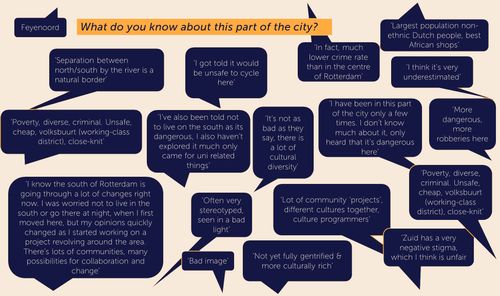
The students shared a wide range of impressions about Rotterdam South. Many mentioned the negative image and stigma often associated with the area, being described as unsafe, poor, or criminal. Several students admitted they had heard warnings not to live, study, or cycle there due to its reputation for danger, even before they moved to the city themselves.
At the same time, many others challenged these stereotypes, highlighting the cultural diversity, community spirit, and potential for change. They described Rotterdam South as vibrant, underestimated, and full of opportunities, with strong local communities and many cultural initiatives.
Some students also noted the historical and social context, such as the area’s working-class roots, its role as a home for immigrant communities, and its ongoing urban transformation and gentrification. Overall, the reflections reveal a mix of perceptions, from fear and prejudice to appreciation and optimism about the area’s diversity and evolving identity. Stigmatising views and stereotyping can have profound and lasting impacts on the communities affected, affecting, among other things, trust and engagement, also affecting co-creation and collaboration initiatives.
Go deeper
Academic Articles:
Custers, G. (2025, February 18). Rotterdam-Zuid is improving, but not for all residents. Erasmus Extra
Doucet, B., & Koenders, D. (2018). ‘At least it’s not a ghetto anymore’: Experiencing gentrification and ‘false choice urbanism’in Rotterdam’s Afrikaanderwijk. Urban Studies, 55(16), 3631-3649.
Esteban, T. A. O. (2026). Of house and immigrants: How did low-income immigrants end up in a sinking neighbourhood. Cities, 169, 106599.
Horgan, D., & Koens, K. (2024). Don’t Write Cheques You Cannot Cash: Challenges and Struggles with Participatory Governance. In From Overtourism to Sustainability Governance (pp. 227-240). Routledge.
In Dutch:
Oostveen, M. (2023, October 20). In deze Rotterdamse wijk zijn bewoners nu wel genoeg onderzocht: “Ze denken dat ze hier even data kunnen komen halen.” Volkskrant.
Rijnmond (2025, July 17). Rotterdam-Zuid krijgt al jaren extra miljoenen en dit is wat het oplevert. NOS
Reflection Questions Module 2
1. Perceptions and realities
The students’ comments reveal both negative stereotypes and positive experiences of Rotterdam South. How might such perceptions influence the way people engage with a place and its communities, according to you? Reflect on how education and co-creation projects might help shift these perceptions or bridge the gap between image and reality.
2. The role of education in co-creation
Cultuur&Campus Putselaan invites students to learn together with the neighbourhood, not just about it. What role might educational programmes and students play in co-creation processes within local communities? In your reflection, consider in what ways learning, research, and collaboration might contribute to more inclusive and meaningful change.
Module 3: What is Co-Creation?
Theoretical Background
Co-creation is a collaborative process in which different stakeholders, such as residents, institutions, professionals, and community groups work together to design, implement, and evaluate projects or services. Rather than following a top-down approach, co-creation emphasizes shared responsibility, mutual learning, and the integration of different types of knowledge, including local, experiential, and academic expertise. Research on urban innovation highlights that co-creation helps address complex social challenges by connecting people and organizations in meaningful ways and by fostering inclusive governance (Frantzeskaki et al., 2025; Cargo & Mercer, 2008). Governance refers to the way decisions are made, who gets to participate in those decisions, and how responsibilities are shared between different groups. It includes the processes, relationships, and rules that shape how organisations, institutions, and communities work together.
Widely cited research in public innovation emphasises that co-creation emerges from earlier ideas of co-production. Ostrom (1996) highlights how shared responsibility between governments and citizens improves public service delivery, a foundation that developed into the broader concept of co-creation. Building on this legacy, Voorberg, Bekkers and Tummers (2015) identify key conditions that encourage active participation, such as trust, social motivations, and clear roles for community stakeholders.
In the context of Culture&Campus Putselaan, co-creation forms the foundation of how the campus operates and evolves. By working together, the different partners (local residents, schools, cultural organizations, universities, and municipal bodies) can identify shared challenges and opportunities shaping solutions that reflect the real needs and aspirations of the community. For example, exercises such as inviting students to share their thoughts about Rotterdam South help uncover how people perceive the area, providing valuable input for the campus’ educational and cultural programmes.
Collaborative workshops and joint projects allow residents, students, and creatives to design events, exhibitions, or spatial interventions together. This participatory approach ensures that the campus remains connected to what happens in the neighbourhood and continues to evolve alongside it.
In urban governance scholarship, Torfing, Sørensen and Røiseland (2019) describe co-creation as a collaborative method in which municipalities, institutions, and communities generate public value together. This understanding closely aligns with the work of Cultuur&Campus Putselaan, where institutional partners and residents jointly shape programmes, events, and decisions.
From a design perspective, Sanders and Stappers (2008, 2014) emphasise that co-creation depends on creative collaboration and the involvement of people not only as informants but as active contributors. Their work highlights why prototyping, making, and shared exploration are essential elements of place-based projects such as Cultuur&Campus Putselaan.
Co-creation requires more than participation alone (Healey, 1997). It depends on the ability of stakeholders to negotiate meaning, build relationships, and develop shared ownership over both process and outcome. This perspective reinforces the importance of long-term trust-building and open dialogue within the C&CP community.
Participatory urban development scholars further emphasize that successful co-creation depends on trust, reciprocity, and equal participation among stakeholders (Leask et al., 2019). At Culture&Campus Putselaan, this is reflected in efforts to create an open and inclusive environment where everyone, from policymakers to schoolchildren, can contribute. Over time, this approach can develop into shared ownership and governance structures which include participatory decision-making processes.
Ultimately, co-creation at C&CP bridges academic research and local experience. By combining formal expertise with the lived realities of residents, the campus aims to nurture innovative and inclusive solutions that strengthen Rotterdam South. This reflects the broader academic understanding of co-creation as a process of doing with, rather than designing for, which empowers communities to shape their own environments and futures.
Additional Material
Go deeper/ recommended readings:
Arnstein, S. R. (1969). A ladder of citizen participation. Journal of the American Institute of Planners, 35(4), 216–224.
Caneparo, L., & Bonavero, F. (2016). Neighborhood regeneration at the grassroots participation: Incubators’ co-creative process and system. International Journal of Architectural Research, 10(2), 204–218.
Cargo, M., & Mercer, S. L. (2008). The value and challenges of participatory research: Strengthening its practice. Annual Review of Public Health, 29, 325–350. https://doi.org/10.1146/annurev.publhealth.29.091307.083824
Frantzeskaki, N., Collier, M., Hölscher, K., et al. (2025). Premises, practices and politics of co-creation for urban sustainability transitions. Urban Transformations, 7(7). https://doi.org/10.1186/s42854-025-00075-9
Healey, P. (1997). Collaborative planning: Shaping places in fragmented societies. Macmillan.
Hickey, G., & Kipping, C. (1998). Exploring the concept of user involvement in mental health through a participation continuum. Journal of Clinical Nursing, 7(1), 83–88. https://doi.org/10.1046/j.1365-2702.1998.00122.x
Ostrom, E. (1996). Crossing the great divide: Coproduction, synergy, and development. World Development, 24(6), 1073–1087.
Sanders, E. B. N., & Stappers, P. J. (2014). Probes, toolkits and prototypes: Three approaches to making in codesigning. CoDesign, 10(1), 5–14.
Torfing, J., Sørensen, E., & Røiseland, A. (2019). Transforming the public sector into an arena for co-creation: Barriers, drivers, benefits, and ways forward. Administration & Society, 51(5), 795–825.
Voorberg, W., Bekkers, V., & Tummers, L. (2015). A systematic review of co-creation and co-production in the public sector: Exploring the outcomes of public service innovation. Public Management Review, 17(9), 1333–1357.
Reflection Questions Module 3
1. From theory to practice
Arnstein’s Ladder of Citizen Participation distinguishes between different levels of involvement, from tokenism to genuine citizen power. Judging by initial impression, where would you place Cultuur&Campus Putselaan on Arnstein’s ladder, and why? Consider how decisions are made and whose voices are most influential in shaping the project.
2. Balancing knowledge and power
Co-creation values the combination of academic, professional, and local knowledge. What challenges might arise when trying to balance these different forms of knowledge and expertise? Reflect on how trust, reciprocity, or communication might affect this balance in real projects.
3. Co-creation and ownership
Co-creation aims to build shared ownership and sometimes even shared governance over a project or space. Drawing on co-creation experiences you might be involved with, what does “shared ownership” mean to you in this context? How might being part of decision-making, not only activities, influence how people feel responsible for or connected to their neighbourhood?
Module 4: The New European Bauhaus and Co-Creation
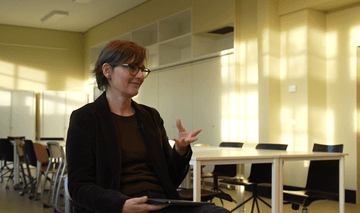
Speaker: Prof. Amanda Brandellero, principal investigator of Cultuur&Campus Putselaan
Amanda Brandellero is a professor of Culture and Sustainability at Erasmus University Rotterdam and the principal investigator (lead researcher) of the Cultuur&Campus Putselaan project. In the interview she explains the foundations of the New European Bauhaus (NEB) and describes how its values of sustainability, inclusion, and aesthetics shape the vision behind the project. She also discusses the working principles of NEB, such as participation, transdisciplinarity, and multi-level engagement, and reflects on how these ideals guided the design of the project.
Amanda describes the different levels at which co-creation takes place, from collaboration between education institutes to engagement with the neighbourhood through the stakeholder group. She reflects honestly on the challenges of achieving genuine co ownership in practice, while also highlighting examples where co-creation worked well, such as the Bloemhof Festival and collaborative work on the C&CP research agenda.
Reflection Questions Module 4
1. Values in practice
Amanda describes sustainability, inclusion, and aesthetics as the core values of the NEB. What are your thoughts on how might these values influence the way neighbourhood projects are designed and implemented? Reflect on why it might be important to consider experience, beauty, and social cohesion alongside technical or environmental goals.
2. Participation and co-ownership
The NEB places a strong emphasis on participation, co-design, and even co-ownership. What do you think makes it difficult for institutions and communities to reach genuine co-ownership in practice? Consider issues such as timelines, power dynamics, or institutional constraints.
3. Local knowledge and transdisciplinarity
Amanda highlights that NEB projects should combine scientific knowledge, artistic practices, and lived experience. What opportunities and challenges might arise when different kinds of expertise are brought together in this way? Reflect on how this mix of knowledge could shape more meaningful or more complex co-creation processes.
Module 5: Examples and Reflections of Co-Creation at Cultuur&Campus
This module provides a range of co-creation examples of Cultuur&Campus Putselaan and reflects on the learnings of the team throughout the process.
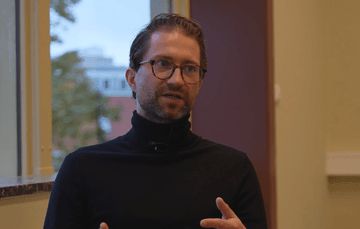
5.1: Embedding Co-creation in creating a Masterplan and embedding NEB vision into Policy making
Speaker: Sebastiaan Spierings, project secretary at the Municipality of Rotterdam
Sebastiaan Spierings works for the Municipality of Rotterdam as a project secretary in the social domain. In the interview he explains his role in supporting Cultuur&Campus Putselaan from the municipal side, helping the team navigate processes, secure the right connections, and translate the ambitions of the campus into the larger policy context of Rotterdam South. He describes how he acted as a linking figure between the project and various municipal departments, especially during the process of co-writing the Masterplan for the continued development.
Sebastiaan also reflects on what co-creation means from the perspective of the municipality. He talks about the importance of being realistic about what is and is not possible within a public institution, the limits imposed by procedures and planning systems, and the need to manage expectations when working with neighbourhood partners. Throughout the interview, he highlights the value of openness, early involvement, and honest communication as the foundation for successful co-creation.
Reflection Questions 5.1
1. Navigating institutional constraints
Sebastiaan describes how municipal procedures and responsibilities shape what is possible in a co-creation process. How do you think institutional structures influence collaboration with local communities? Reflect on how transparency or early communication might help manage expectations.
2. The role of a linking figure
Sebastiaan positions himself as a connector between the campus and the municipality. Why might such a bridging role be important in co creation projects? Consider what risks and opportunities appear when one person or team acts as the link between different worlds.
3. Realistic co-creation
Throughout the interview Sebastiaan stresses the importance of being honest about practical limits within co-creation trajectories. How can projects maintain ambition and creativity while also respecting institutional boundaries? Reflect on how clarity about what is possible might support more meaningful and sustainable co-creation.
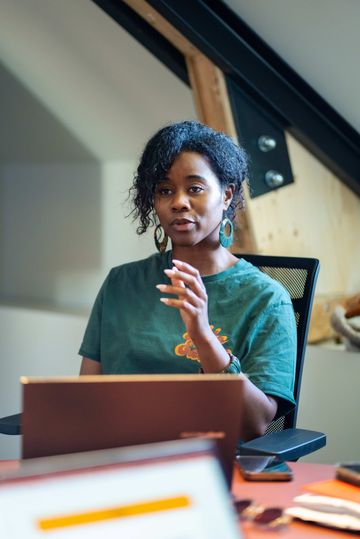
5.2: Co-creating the C&CP Opening Exhibition
Written text by Aïssatou Traoré, Communications lead at Cultuur&Campus Putselaan
The art exhibition showcased the work of diverse artists through co-creation and community engagement. A central element was De Agoré, a modern meeting place inspired by the classical Greek agora, where artists and visitors come together for dialogue, workshops, and co-creation sessions. The exhibition focuses on making collaboration tangible and enabling the public to actively participate in conversations about the exhibited art, with a strong emphasis on inclusivity and community engagement. The theme for the exhibition was heritage.
Stakeholders were involved from the very beginning through intensive collaboration. The team worked with artists not just as curator and producer, but as a collective bringing the expo to life together. The multidisciplinary team included different roles, from curator, producer and co-producer to communications. With everyone contributing from their own expertise to work together on narratives and logistics and promotion.
Within communications, personal stories, portfolios, and backgrounds of the artists were collected to create authentic content, done in close collaboration so that their voice and perspective remained central.
There were some challenges around task distribution, developing smooth work dynamics in a newly established team, and scheduling. Team members also experienced high workload during peak periods, with concerns about meeting deadlines and managing the initial planning.
Reflection Question Module 5.2
Collaboration and creative tension
The exhibition team worked closely with artists and producers, but also experienced tension around roles, workload, and trust. How do you think creative teams can balance collaboration with clear responsibilities in co-creation processes? Reflect on how transparency, shared expectations, or communication might influence both the quality of the final product and the well-being of the team.
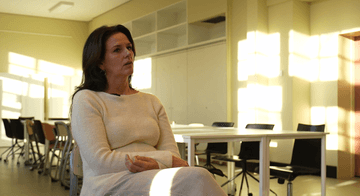
5.3: Strengthening co-creation through shared responsibility and long-term partnership
Speaker: Frauke Timmermans, project manager of Cultuur&Campus Putselaan
Frauke Timmermans is the project manager of the NEB funded phase of Cultuur&Campus Putselaan and the business manager responsible for its long term development. In her interview she reflects on how co-creation has taken shape at the campus, describing how residents, partners, and the project team collaborated on shared initiatives such as the garden and a range of community events.
She speaks about the realities that influenced the process, including the challenge of keeping a diverse group of people actively involved over time and the impact of changes within the team. At the same time she highlights moments when co-creation worked well, such as community discussions that created space for shared reflection and the joint development of the garden. Looking ahead she describes how a new programme team with equal representation of residents and partners aims to strengthen shared ownership and further embed NEB values in the continuing development of the campus.
Issue Wrestling: The Dark Side of Placemaking
As Frauke Timmermans introduced, Cultuur&Campus Putselaan, the Afrikaanderwijk Cooperative and artist Natasha Taylor have organized this evening about (the dark side of) placemaking. Together with invited guests and the public we entered the conversation and we experienced a wrestling match that visualized the struggle and complexity behind these themes and concepts.
Issue Wrestling serves as a platform to confront social issues through the spectacle of wrestling, providing an arena for open discourse within a community. Issue Wrestling investigates whether a wrestling match can foster connection and stimulate a dialogue by magnifying differences in a lighthearted manner.
The characters, script and costumes for Issue Wrestling: The Dark Side of Placemaking were developed based on conversations at neighbourhood gatherings and surveys.
Reflection Questions Module 5.3
- Co-creation during renovation
Frauke explains how residents, partners, and the project team were involved in shaping the building, the garden, and early events. What do you think are the biggest challenges of practicing co-creation during a renovation process? Reflect on how technical limitations or shifting timelines might affect people’s ability to stay engaged. - Managing changing teams and expectations
Frauke highlights that team changes and a heritage building created constraints that shaped the process. How do you think leadership and communication can support continuity in co-creation when circumstances or teams change? Consider what helps maintain trust and shared direction. - Towards shared ownership
Looking ahead, Frauke describes a new programme team with equal representation of residents and partners to strengthen shared ownership. What does equal representation mean to you in practice? Reflect on how such a structure might improve co-creation or introduce new complexities in decision-making.
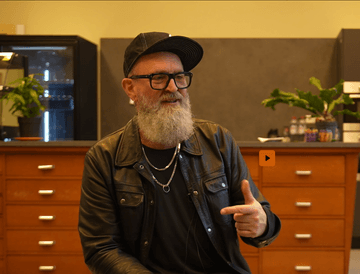
5.4 Co-creation as an open, relational process shaped by trust and exploration
Speaker: Janpier Brands, programme director of Cultuur&Campus Putselaan
Janpier Brands is the programme director of Cultuur&Campus Putselaan. In this fragment he describes co-creation as a process that begins long before concrete plans or programmes are made. For him the most important work happens in the early stages, when people meet, build trust, and explore ideas together without knowing yet what form a collaboration will take. He emphasises curiosity, openness, and reciprocity as the conditions that allow meaningful co-creation initiatives to emerge.
Janpier also reflects on the role of the programme team, explaining that co-creation requires flexibility, a willingness to listen, and comfort with uncertainty. Rather than designing fixed activities in advance he sees the campus as a place where ideas grow through relationships and shared exploration. His view aligns closely with the values of the New European Bauhaus, which call for meaningful, beautiful, and socially rooted forms of making and learning.
Reflection Questions Module 5.4
- Co-creation as relationship-building
Janpier describes co-creation as something that grows out of relationships rather than predetermined plans. What do you think changes when a project begins with people instead of ideas or goals? Reflect on how this approach might affect trust, ownership, or the types of activities that emerge. - Comfort with uncertainty
Janpier notes that co-creation requires a programme team that is willing to explore, adapt, and work without full certainty about the outcome. How comfortable are you with open-ended processes in your own work or studies? What skills or attitudes are needed to navigate this kind of uncertainty? - The role of curiosity and reciprocity
Curiosity and reciprocity are central to how Janpier understands co-creation. How might these qualities influence the interactions between institutions, residents, and students? Consider how behaving with curiosity or reciprocity could shift the power dynamics in collaborative projects.
Module 6: International Perspectives on Co-Creation between Arts, Academia and Communities
Practice examples curated by ELIA during the Connecting Campus and Community through the Arts session
In this final module you will explore how Cultuur&Campus falls within a range of innovative initiatives around the globe in which local communities collaborate and co-create with educators, artists and academia.
During the Cultuur&Campus Conference on 13 November 2025, ELIA, which is a European network for higher arts education and research, hosted a session titled ‘Connecting Campus and Community through the Arts’. We invited academics and artists to speak about participative and collaborative initiatives that connect community-building and co-creation with teaching and learning practices in the arts. There were five short presentations:
- Nowel Rakik – Makers Op Zuid (Netherlands)
- Josh Slater – London Contemporary Dance School |The Place (United Kingdom)
- Sandrine Desmurs – Cefedem Auvergne Rhône-Alpes (France)
- Juan Pablo Aschner – Universidad del Rosario (Colombia)
- Sophie Dandanell – Gerrit Rietveld Academie (Netherlands)
This was followed by a panel in which the presenters reflected together about building relationships and mutual trust between communities, education institutions, students, and artists.
We have selected three fragments from this session and paired them with questions and additional resources.
If you would rather like to watch the complete session with all speakers and discussion, you can find the recording On Vimeo, the full session recording here (60 min).
The following examples illustrate co-creative approaches of teaching and learning, highlighting emerging practices in arts-education. We encourage you to reflect on what ‘learning’, ‘teaching’ and ‘knowledge’ means in the space of co-creation projects. Would you consider starting a co-creation initiative connecting campus and community through the arts?”
6.1 Nowel Rakik Presents Makersweek
Nowel Rakik is an artist and a Representative Board member of Makers op Zuid, a platform for development, co-creation and knowledge exchange based in Rotterdam. In this fragment from Connecting Campus and Community Through the Arts, she presents the Makersweek which was organized by Makers op Zuid in collaboration with Cultuur&Campus Putselaan at several locations in 2024 and 2025. This initiative moves away from strictly curriculum- and degree-based ways of defining who holds valuable knowledge and skills and in doing so supports community-building and empowerment. It redefines ‘who is the teacher’, ‘who is the student’, and ‘what is useful to learn’.
Reflection Questions
1. Is there something you are passionate and knowledgeable about that you could share with others within your local community, so that they could learn from and with you? This could be a topic, a craft, a profession, a skill, or something else.
2. How did you become passionate and knowledgeable about this? Was it through the traditional education system (school, higher education), did you learn it through life experience, on your job, by having a hobby, from a friend or mentor, etc.? It could also be a combination of answers.
Go deeper
Find out more about Makers Op Zuid, their initiatives and their teachers on their website https://makersopzuid.nl/
6.2: Josh Slater Presents Outside Encounters, London
Josh Slater is Director of Higher Education: Pedagogy & Enhancement at London Contemporary Dance School | The Place, in the United Kingdom. In this fragment from Connecting Campus and Community Through the Arts he introduces The Place’s vision: to build a world with more dance. In particular, he speaks about the unit ‘Outside Encounters’, which is part of their Bachelor programme in contemporary dance. This initiative offers a deeply participative experience of collaboration and co-creation between students, local communities and artists outside of the institution.
Reflection Question
How does The Place support the creation of mutually valuable and reciprocal relationships between artists, communities, and students through the unit ‘Outside Encounters’? Consider the processes, methods, and activities included in the implementation of the unit.
Go deeper
Find out more about London Contemporary Dance School | The Place on their website: https://theplace.org.uk/
There are many different ways in which students can engage with and co-create with local communities and city stakeholders as part of their studies. Like with any participation or co-creation initiative, no one size fits all, so it is important to keep local and institutional contexts in mind.
CrAFt, a partner project of Cultuur&Campus Putselaan piloted various approaches to student participation in city transformation processes. In addition to the inspiring example from The Place, find out about the CrAFt STEAM Teams and the CrAFt Think-Do Tanks approaches through the resources below.
- STEAM Team Experiences 2023-2025 (CrAFt report, 2025)
- Sensing our surroundings: A Think-Do Tank for experiential care practices in our everyday spaces’ (CrAFt article, 2024)
- Dare to imagine sustainable futures together’ (CrAFt article, 2024)
6.3: Juan Pablo Aschner Presents Community Building Through Participatory Design, Bogotá
Juan Pablo Aschner is Dean of the Faculty of Creative Studies at Universidad del Rosario located in Bogotá, Colombia. In this fragment from Connecting Campus and Community Through the Arts, he presents two examples of participatory design projects in the urban space. In these examples you can see how academically trained designers actively work with local communities to create interventions that support community-building in the neighborhood. Leading up to their design intervention, learning with and co-creating with the local community seems key. Different forms of knowledge intertwine to achieve the best result: academic, artistic and local.
Reflection Question
In the presented examples, how did the designers earn the trust of the local community and make sure that the interventions were truly useful for the local community (not ‘just for show’)?
Go deeper:
Find out more about Juan Pablo Aschner Roselli’s urban, participative design work on his webpage: https://www.juanpabloaschner.com/home.html and the university he works for: Faculty of Creative Studies – Universidad del Rosario.
Continue watching
Watch the full recording of Connecting Campus and Community Through the Arts for more inspiring examples and exchanges. You will hear from Sandrine Desmurs, Cefedem Auvergne Rhône-Alpes in France, about their programme in which music students co-create with local communities (min 21:03-27:03). Sophie Dandanell, Rietveld Academie in the Netherlands, presents the grassroots, collective initiative ‘the Garden Department’ (min 33:10-39:10). The recording closes with a panel discussion on how relationships and mutual trust can be built in projects connecting communities, education institutions, students and artists (min 39.33 onwards).
Conclusion
Preliminary conclusions as our work and learning continues
This MOOC has introduced co-creation not as a method in isolation, but more as a mindset for working with people, places, and possibilities. Through theory and real-world practice examples from Cultuur&Campus Putselaan, you have explored how co-creation reshapes roles, redistributes agency, and opens new pathways for meaningful participation and encounter. You have seen that co-creation involves uncertainty, negotiation, and continuous adjustment, but also produces rich outcomes and encounters.
Cultuur&Campus Putselaan’s journey of co-creation is very much ongoing and we are looking forward to the continued learning process. As you move forward, consider how the principles encountered here translate into your own context. Where are decisions being made without those affected? Who is not yet at the table? What structures, habits, or power dynamics need to be questioned to enable genuine collaboration? Co-creation begins with asking these questions and with the willingness to listen, adapt, and share control.
This course or online repository is an invitation to experiment, to reflect, and to remain attentive to the social dynamics that shape collective work. Whether you are a student, practitioner, researcher, or community member, the central challenge is to apply these insights in practice: to design processes that are equitable, transparent, and responsive; to learn from friction; and to treat participation as an ongoing relationship rather than a single intervention.
We encourage you to continue exploring, connecting, and contributing both within your own environment and within broader communities of practice around co-creation. Share what you build, reflect on what works and what does not, and remain open to being changed by the process.
Colofon
The content is made available for educational and non-commercial use. We invite users to share, adapt, and build upon these resources for non-commercial purposes, acknowledging the original project and contributors.
This MOOC has been created by a core team of Jonas Althuis, Janna Michael, Max Kloppers, Amanda Brandellero, and Irene Garofalo with the indispensable contributions of Frauke Timmermans, Janpier Brands, Sebastiaan Spierings, Aïssatou Traoré, Derville Quigley, Gaby Muñiz for Cultuur&Campus Putselaan.